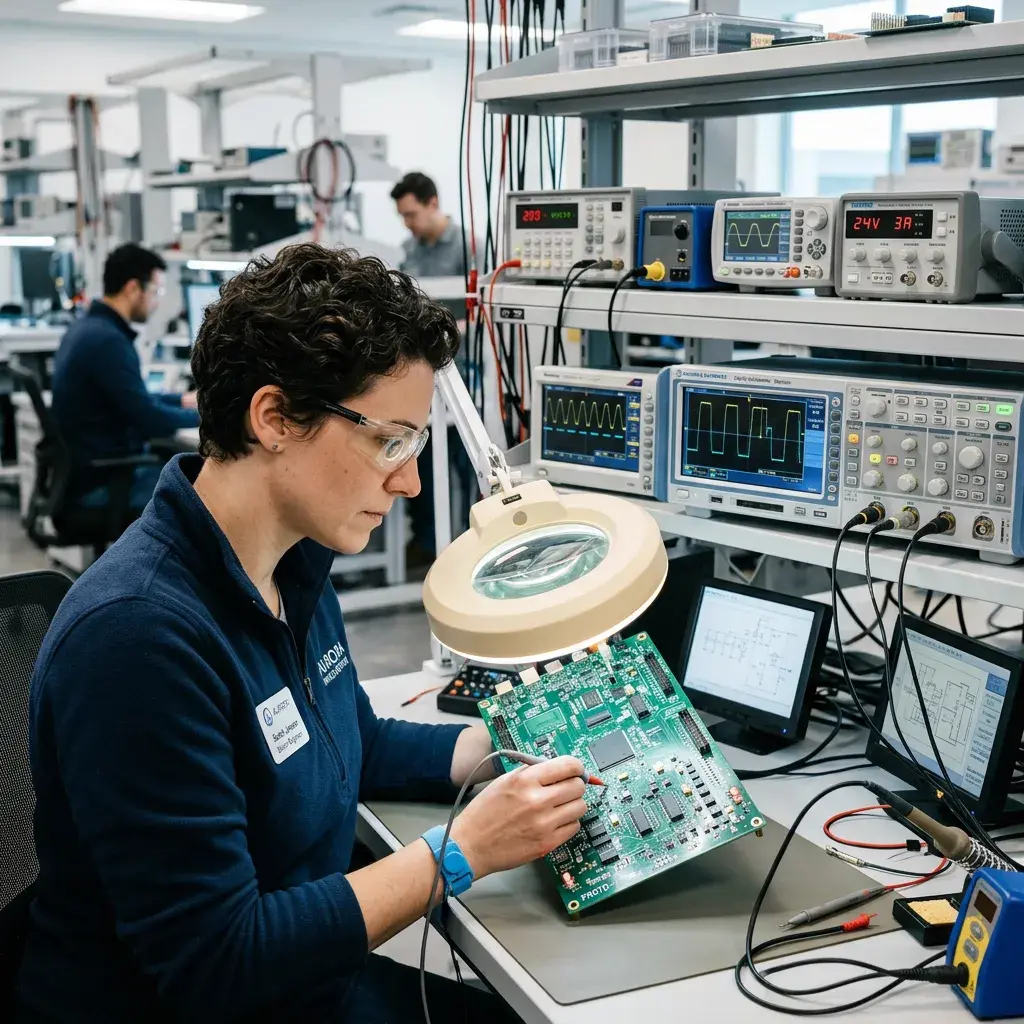
Why Prototyping Matters in Electronics
Prototyping is the critical phase in product development where designs are transformed from schematics into physical electronic assemblies for testing, validation, and iteration. A well-executed prototype reveals design issues, performance characteristics, and manufacturing considerations that no simulation can fully predict.
In the competitive electronics market, the speed and quality of prototyping directly impacts time-to-market — and ultimately, commercial success.
The Prototyping Process
1. Design Review & DFM Analysis
Before assembly begins, experienced engineers review the PCB layout, bill of materials, and assembly drawings for potential issues. Design for Manufacturing (DFM) feedback helps prevent costly errors before they reach the production floor.
2. PCB Fabrication
Prototype printed circuit boards are fabricated with the same specifications as production boards — layer count, copper weight, impedance control, and surface finish. Quick-turn PCB fabricators deliver bare boards in as little as 24-48 hours.
3. Component Sourcing
Prototype quantities require flexible procurement. TOS Lanka's global supply chain network sources components from authorized distributors across Japan, USA, Germany, China, and Taiwan — ensuring authentic components even for small quantities.
4. Assembly
Prototype PCB assembly techniques parallel production processes:
- SMT placement using flexible programming for small runs
- Through hole insertion with precision manual soldering
- Mixed-technology boards combining both processes
5. Testing & Validation
Prototype assemblies undergo thorough testing:
- Visual inspection and AOI verification
- In-circuit testing where test points are available
- Functional testing per customer test procedures
- Firmware programming and debug cycles
Prototyping Best Practices
- Use your production EMS partner: Prototyping with the same EMS provider who will handle production eliminates the risky transition between different manufacturers
- Design for testability: Include test points and debug interfaces in prototype layouts
- Document everything: Capture lessons learned during prototyping for production optimization
- Plan for iteration: First prototypes rarely work perfectly — budget for 2-3 revision cycles
- Consider the full BOM: Verify long-lead-time components are available at production scale
From Prototype to Production
The most efficient product development path is prototyping and production at the same facility. This approach offers:
- Zero re-tooling: Programs, stencils, and fixtures transfer directly to production
- Process continuity: The same engineers and technicians who built your prototype manage the production ramp
- Quality consistency: Identical materials, processes, and inspection criteria
- Faster scale-up: Eliminate the weeks or months typically lost in manufacturing transfer
Prototyping at TOS Lanka
TOS Lanka's prototyping service provides:
- Rapid turnaround prototype printed circuit board assembly
- Flexible processes accommodating design changes and modifications
- Expert technicians handling complex fine-pitch and mixed-technology boards
- Seamless transition to production within the same ISO-certified facility
- Full service from PCB assembly to box build
Accelerate your product development cycle with TOS Lanka. Contact us to discuss your prototyping needs.