Why PCB Protection Matters
Electronic assemblies in real-world applications face threats that can degrade performance and cause premature failure. Moisture, dust, chemicals, salt spray, temperature extremes, and mechanical stress are constant adversaries. Conformal coating and epoxy filling (potting) are the two primary methods for protecting printed circuit board assemblies from these environmental hazards.
Conformal Coating
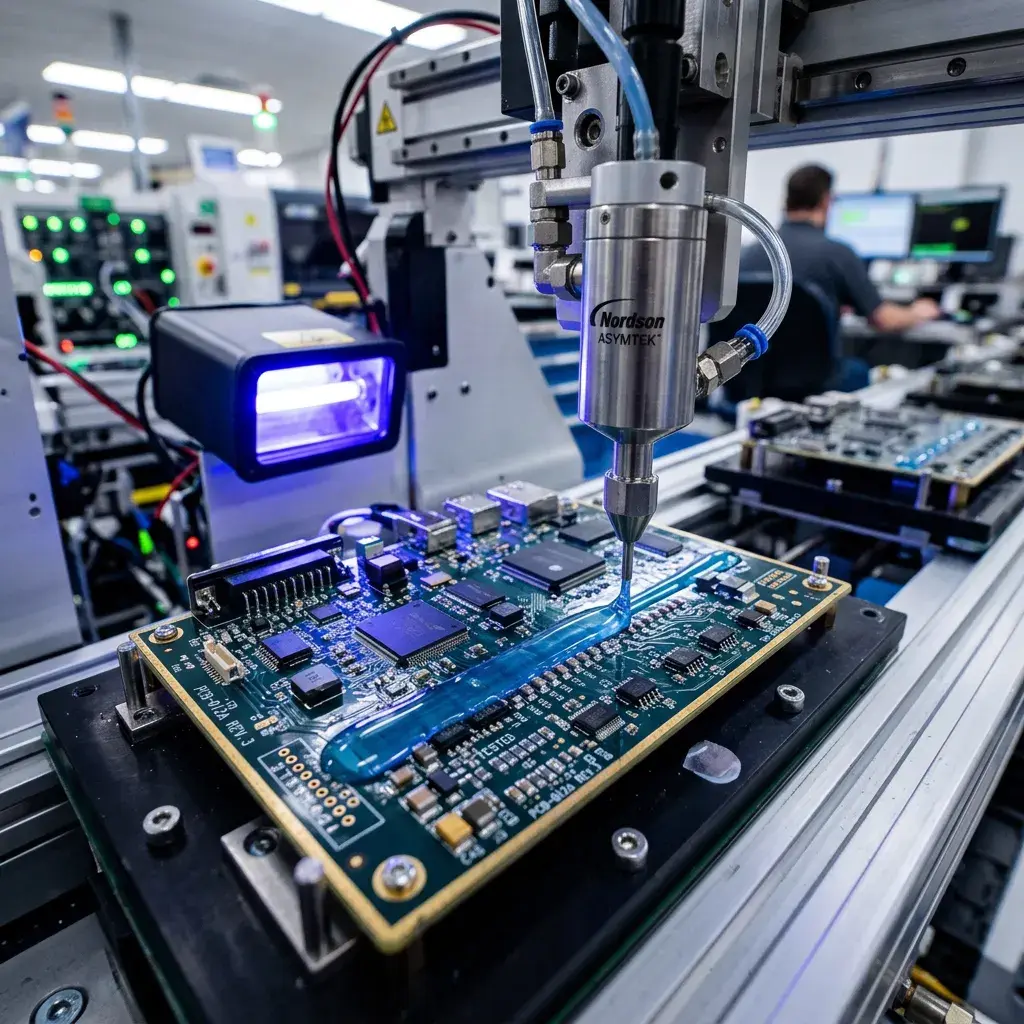
Conformal coating is a thin polymeric film (typically 25-250 micrometers thick) applied directly to the surface of an assembled PCB. The coating "conforms" to the board topology, covering components, solder joints, and exposed traces while maintaining the board's flexibility and allowing visual inspection.
Types of Conformal Coatings
- Acrylic (AR): Easy to apply and rework, good moisture protection, widely used in consumer and industrial electronics
- Silicone (SR): Excellent temperature range (-65°C to +200°C), ideal for automotive and high-temperature applications
- Polyurethane (UR): Excellent chemical resistance, good for harsh chemical environments
- Epoxy (ER): Very hard and durable, excellent chemical and abrasion resistance
- Parylene (XY): Ultra-thin vapor-deposited coating, pinhole-free, ideal for medical devices
Application Methods
- Selective spray coating: Robotic nozzles apply coating precisely to defined areas
- Dip coating: PCBs are immersed in coating material for full coverage
- Brush coating: Manual application for prototypes or selective touch-up
- Inline automated coating: High-throughput continuous coating systems for production volumes
Epoxy Filling (Potting)
Epoxy filling — also called potting or encapsulation — involves filling a housing or enclosure with a curable compound that completely surrounds the electronic assembly. This provides maximum protection against:
- Extreme vibration and mechanical shock
- Water immersion and high-pressure wash-down
- Thermal cycling and extreme temperatures
- Chemical attack and corrosive atmospheres
- Reverse engineering and IP theft
Common Potting Materials
- Epoxy: Hard, excellent adhesion, good thermal conductivity — widely used in industrial electronics and power supplies
- Polyurethane: Flexible, good low-temperature performance, easier rework
- Silicone: Extremely flexible, wide temperature range, gentle on sensitive components
When to Use Each Method
| Application | Conformal Coating | Epoxy Filling |
|---|---|---|
| Automotive electronics | Under-hood sensors, dashboard PCBs | ECU modules, power electronics |
| Medical electronics | Monitoring equipment | Implantable devices |
| Industrial controls | Interior control panels | Outdoor sensors, IP67+ devices |
| Marine | Navigation electronics | Submersible systems |
Coating & Potting at TOS Lanka
TOS Lanka's coating and potting facility provides:
- Custom conformal coating using industry-approved materials
- Inline automated coating systems for high-volume production
- Epoxy filling and encapsulation services
- Material compatibility consultation for your specific application
- Integration with our full EMS capability
Protect your electronics with TOS Lanka's expert coating solutions. Contact us for a consultation.